Ceylon
The Surgeon of CrowthorneCeylon, now Sri Lanka, is the setting of William Chester Minor’s birth and first fourteen years, and the place he later associated with formative memories that shaped his understanding of his own life. The book places his childhood within an American Protestant mission community on the island’s north-east coast, while also giving Ceylon a larger narrative role: it is at once a real home, a crossroads of languages and travel, and the landscape to which Minor later returned in explaining his personal history.
Island Setting and Mission Life
The account introduces Ceylon as a lush tropical island south of India and describes its abundant produce, spices, tea, coffee, gemstones, and wildlife. This broad, almost catalogue-like portrait gives way to the more specific setting of the Minor family’s mission station: Manepay, a village near the British naval station at Trincomalee. The book’s panoramic description establishes the island’s distance from the family’s American origins, while Manepay anchors the story in a particular community and place.
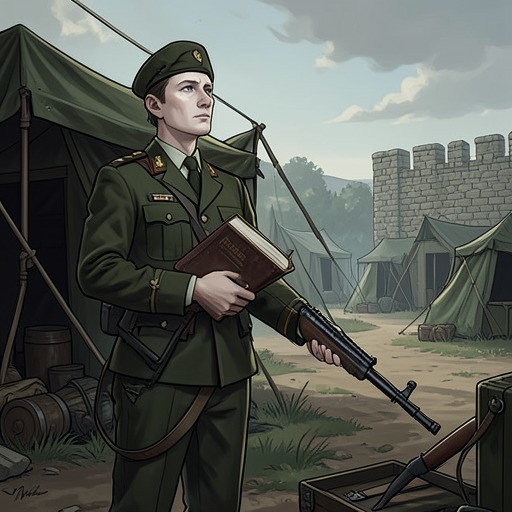
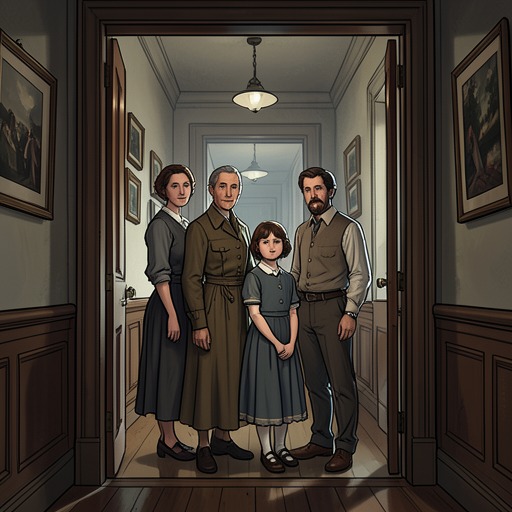
Eastman Strong Minor and his wife, Lucy, arrived in Ceylon in March 1834. They had left an established life in the United States, where Eastman had worked as a printer, to pursue missionary work in the East Indies. William was born three months after their arrival, in June 1834, at the mission clinic. His younger sister, also named Lucy, was born two years later. The family’s residence was not presented as comfortable: a family diary later described the accommodation as very poor. Yet the mission itself offered William important educational resources, including a well-stocked library and a school that the book describes as excellent.
Childhood, Education, and Travel
Ceylon shaped William’s childhood not only through the mission’s institutions but through the family’s pattern of movement and learning. His father’s printing work gave him access to books and newspapers. His parents travelled by horse and buggy and brought him with them, encouraging him to learn local languages. By twelve, William spoke good Sinhalese and reportedly had some knowledge of Burmese, Hindi, Tamil, and several Chinese dialects. His early familiarity also extended beyond the island: the book says he knew Singapore, Bangkok, Rangoon, and Penang.
That education distinguishes William’s upbringing from a conventional childhood in New England, but the account also records its instability and losses. His mother died of consumption when he was three. Two years later, rather than return to the United States with both children, Eastman left William’s sister in the care of missionaries in the Sinhalese village of Oodooville and travelled east with William to seek a second wife among mission communities in the Malay Peninsula. Ceylon was therefore both the family’s home base and the starting point for a childhood shaped by separation and travel.
The book also presents the island as the setting of William’s adolescent memories. He later told doctors that, at thirteen, he experienced the beginnings of a sexual preoccupation that he regarded as consequential. Rather than treating this retrospective account as an objective explanation for everything that followed, the narrative identifies it as the story Minor himself told about his development: a memory rooted in the surroundings of his Ceylon childhood, and one he connected to later distress. The island thus functions as more than scenery; it is the place from which he organized part of his personal account of the past.
Departure and the Island’s Lasting Place in His Story
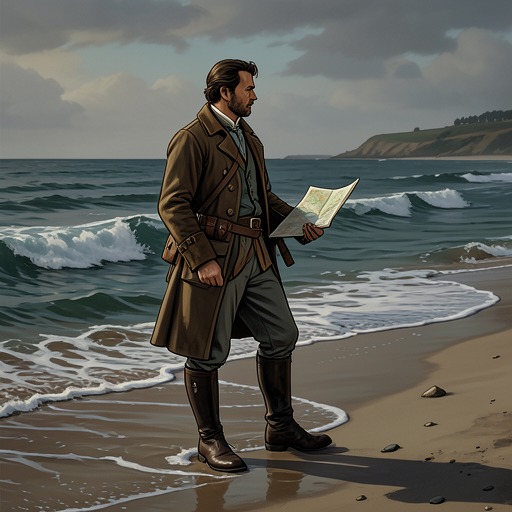
When William was fourteen, his parents sent him to live with his uncle Alfred in New Haven, away from the environment they believed might be harmful to him. He left from Colombo in 1848 aboard a P&O liner. Before the Suez Canal was completed, the journey between Bombay and London went around the Cape of Good Hope, making the passage a long one. Ceylon’s role in his life changed at that point: it ceased to be his daily home and became a place remembered from across an ocean.
The voyage itself remained part of William’s later recollections. He described a strong attraction to a young English passenger, but the book notes that the relationship was not consummated and that, years later, he presented this and his earlier feelings as experiences he had not acted upon. These memories belong to his account of leaving Ceylon and entering a different stage of life; they do not establish the island as a single cause of his later condition.
Ceylon returned to the narrative in 1884, when William’s elderly stepmother visited him the month before his fiftieth birthday, on her way back to America after staying on the island since her husband’s death. The detail reconnects the confined adult with the family’s missionary history and with the place of his birth. Much later, the book’s research into that history also depended on the Yale Divinity Library, whose staff supplied information about William’s early life there. Across childhood recollection, family travel, and archival research, Ceylon remains a point of origin whose significance is personal and documentary as well as geographical.